 Synthyra
News & research
News.
Company updates, technical articles, and measured results.
14 items

News · August 25, 2026 · Announcement · 2 min read
Stephen Wolfram Joins Synthyra as Advisor
Stephen Wolfram, PhD, creator of Mathematica, Wolfram|Alpha, and the Wolfram Language, joins Synthyra as an advisor on computational systems and scientific software.
Read article →
Paper · August 18, 2026 · Synthyra and the University of Delaware
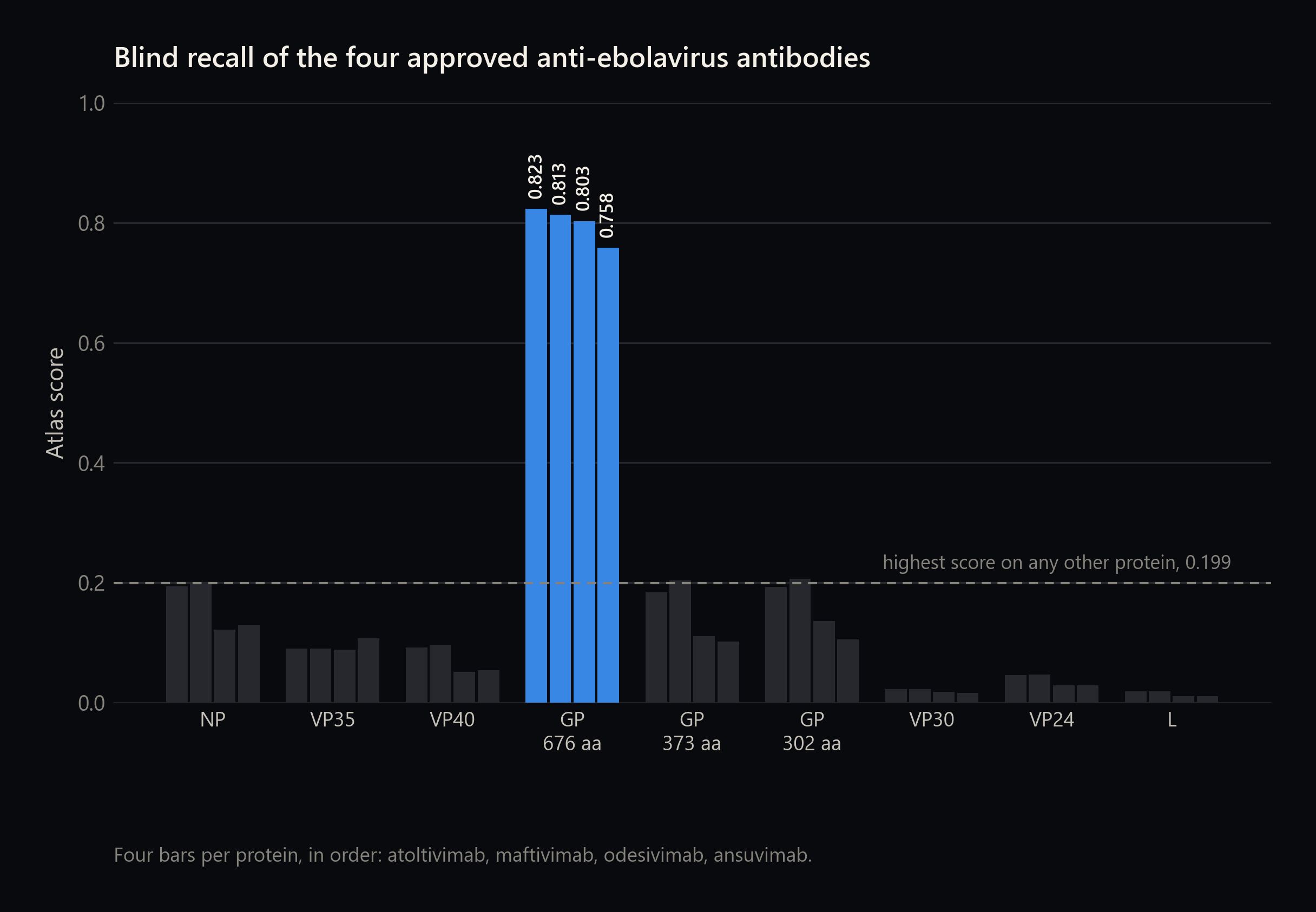
Atlas Host-Pathogen Interaction Report
Every computational method tested on human-SARS-CoV-2 interactions scores at chance. A sequence-only model that clears the random floor is tested here against three pathogens with active clinical relevance.
Read paper →

News · August 10, 2026 · Announcement · 2 min read
Diane Heiser Joins Synthyra as Advisor
Biotech executive and scientific founder Diane Heiser, PhD, joins Synthyra as an advisor on company building, partnerships, and translation.
Read article →
Research · April 9, 2026 · Research · 7 min read
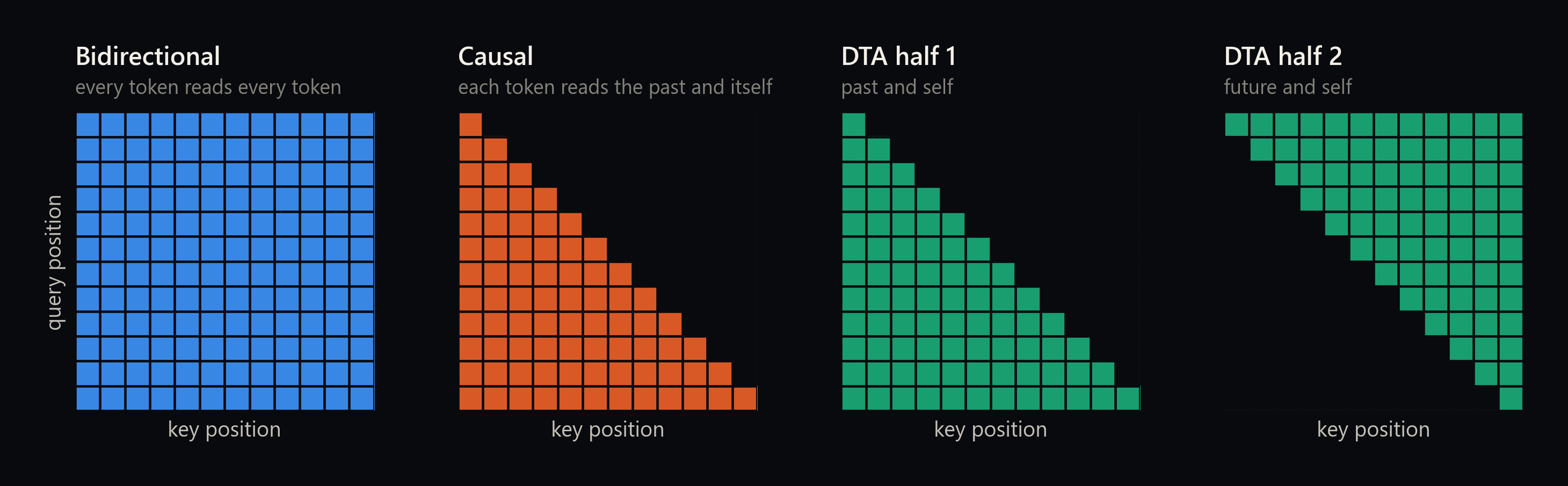
Dual Triangle Attention: Position Sense for Bidirectional Models
Split each attention head into a past-facing half and a future-facing half, and a bidirectional transformer stops being blind to word order without any positional embeddings at all.
Read article →
Research · October 24, 2025 · Research · 7 min read
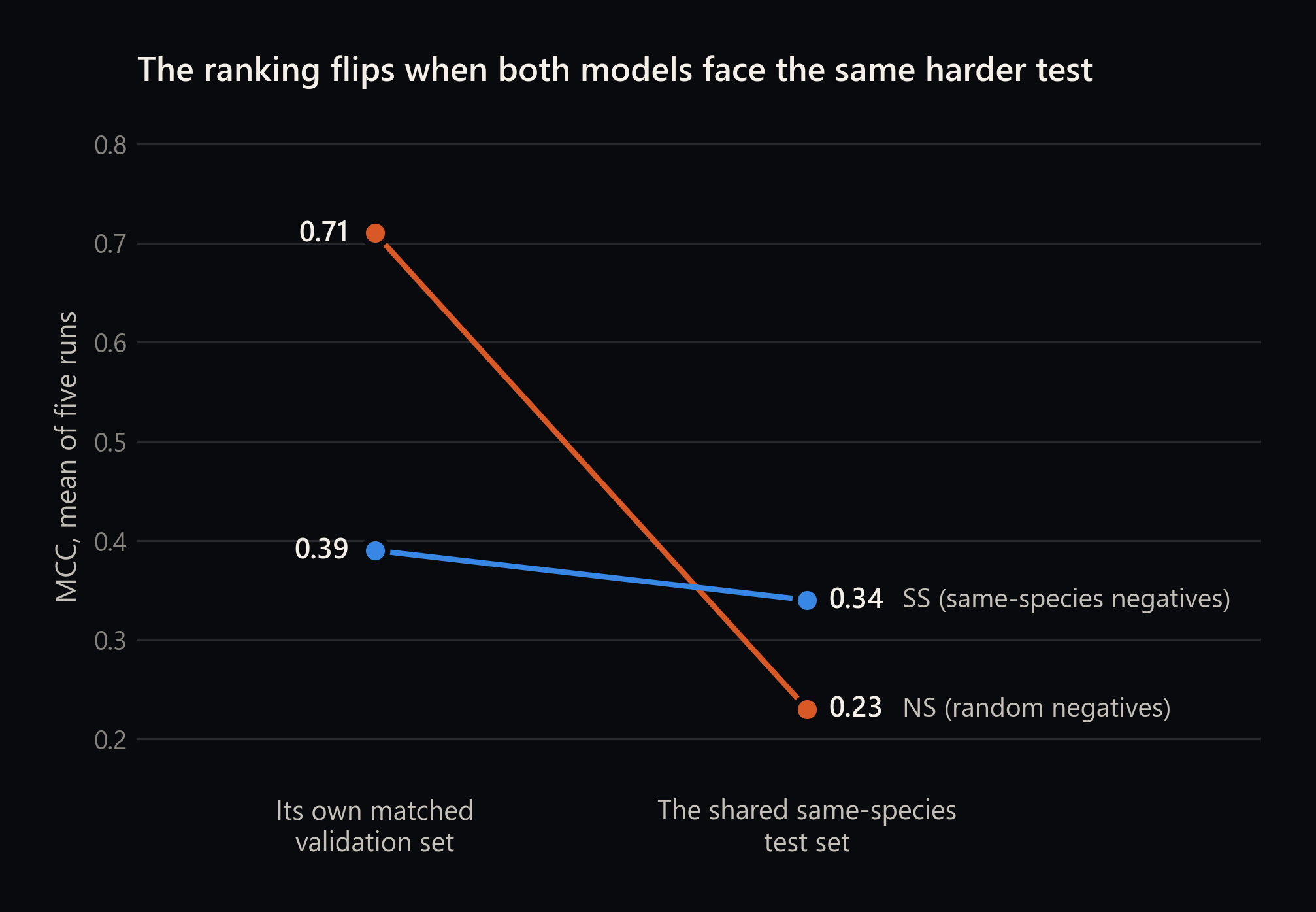
Accidental Taxonomists: When Protein Models Learn the Wrong Shortcut
A model can score 0.82 AUROC on protein interaction prediction while answering a completely different question: are these two proteins from the same species?
Read article →
Research · October 10, 2025 · Research · 9 min read
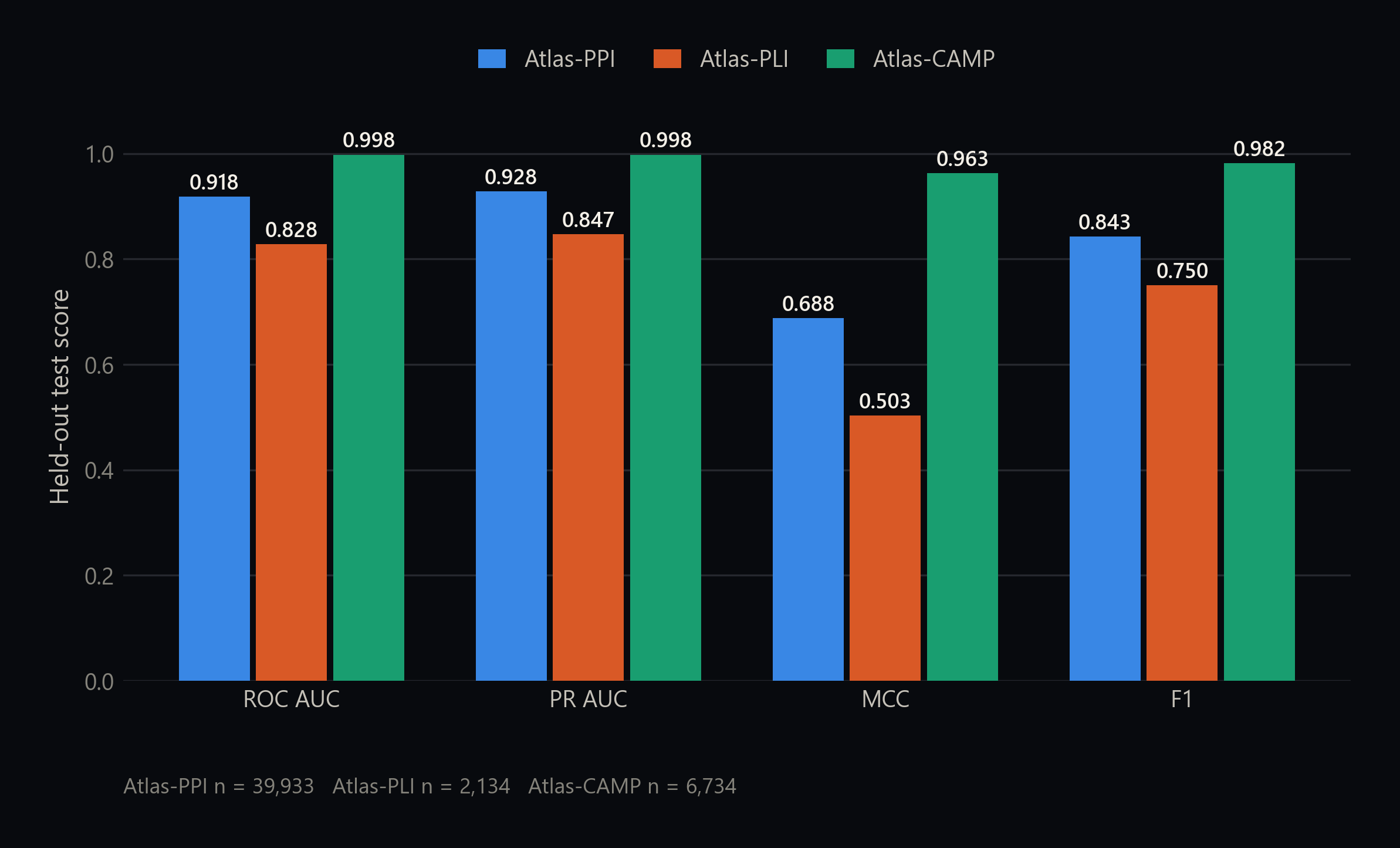
Atlas: Making Protein Screens Searchable
A proteome is a quadratic object. Atlas exists so that asking a question about all of it costs about as much as asking one question.
Read article →
Research · September 18, 2025 · Research · 9 min read
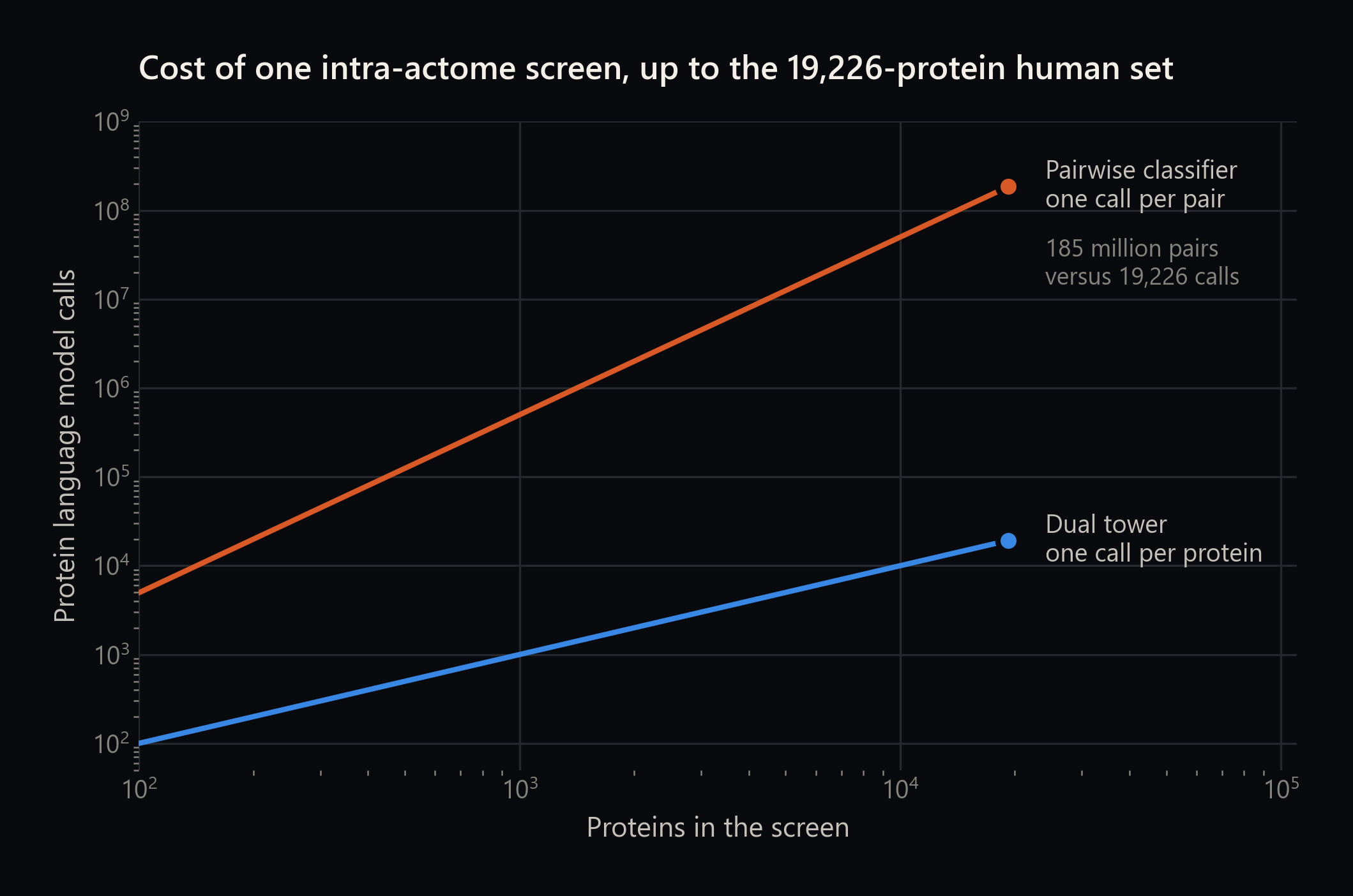
Synteract-4: Interaction Prediction as Retrieval
Making the embedding itself the interaction score turns a proteome-wide screen from 185 million model calls into 19,226.
Read article →
Research · August 21, 2025 · Research · 7 min read
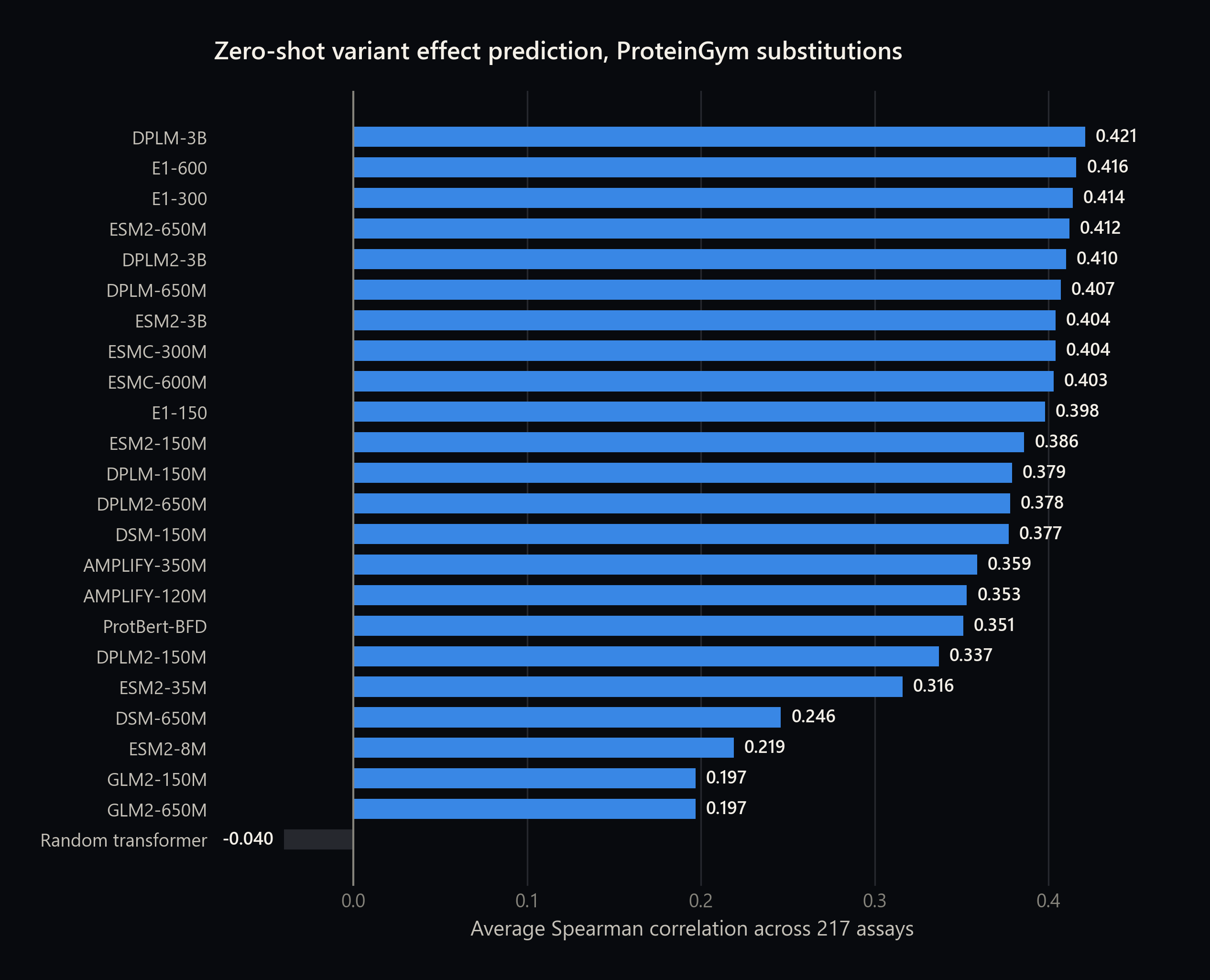
Protify: Model Choice As An Experiment
Across 32 protein tasks, 13 different models won at least once and none of the wins were statistically significant. Picking a protein language model is an experiment, not a preference.
Read article →
Research · July 31, 2025 · Case Study · 7 min read
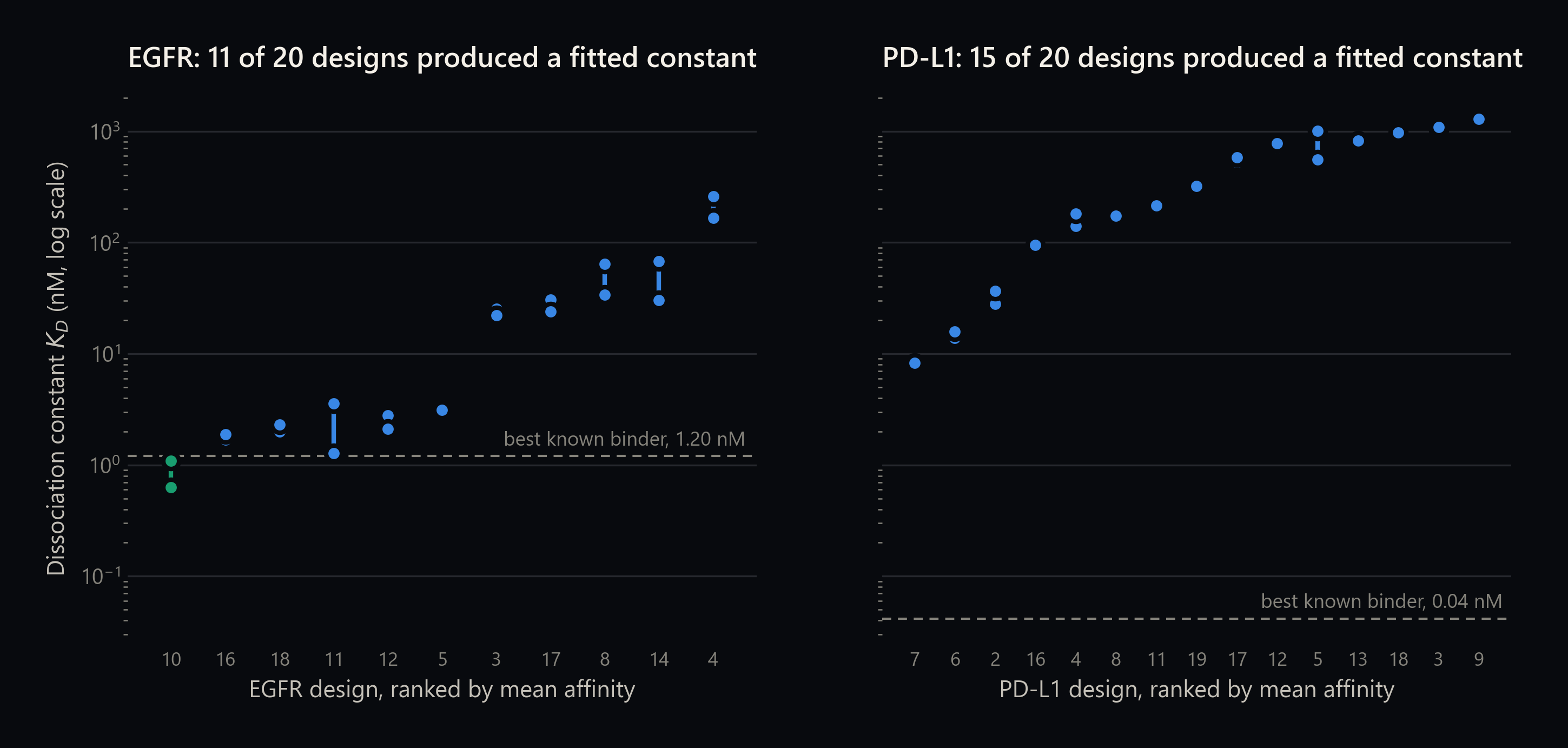
From Generated Sequence to Measured Binding
Forty designed proteins went to the bench. One bound EGFR at 0.861 nM, better than the reference binder. Eight never expressed at all. Both halves are the result.
Read article →
Research · April 22, 2025 · Research · 5 min read
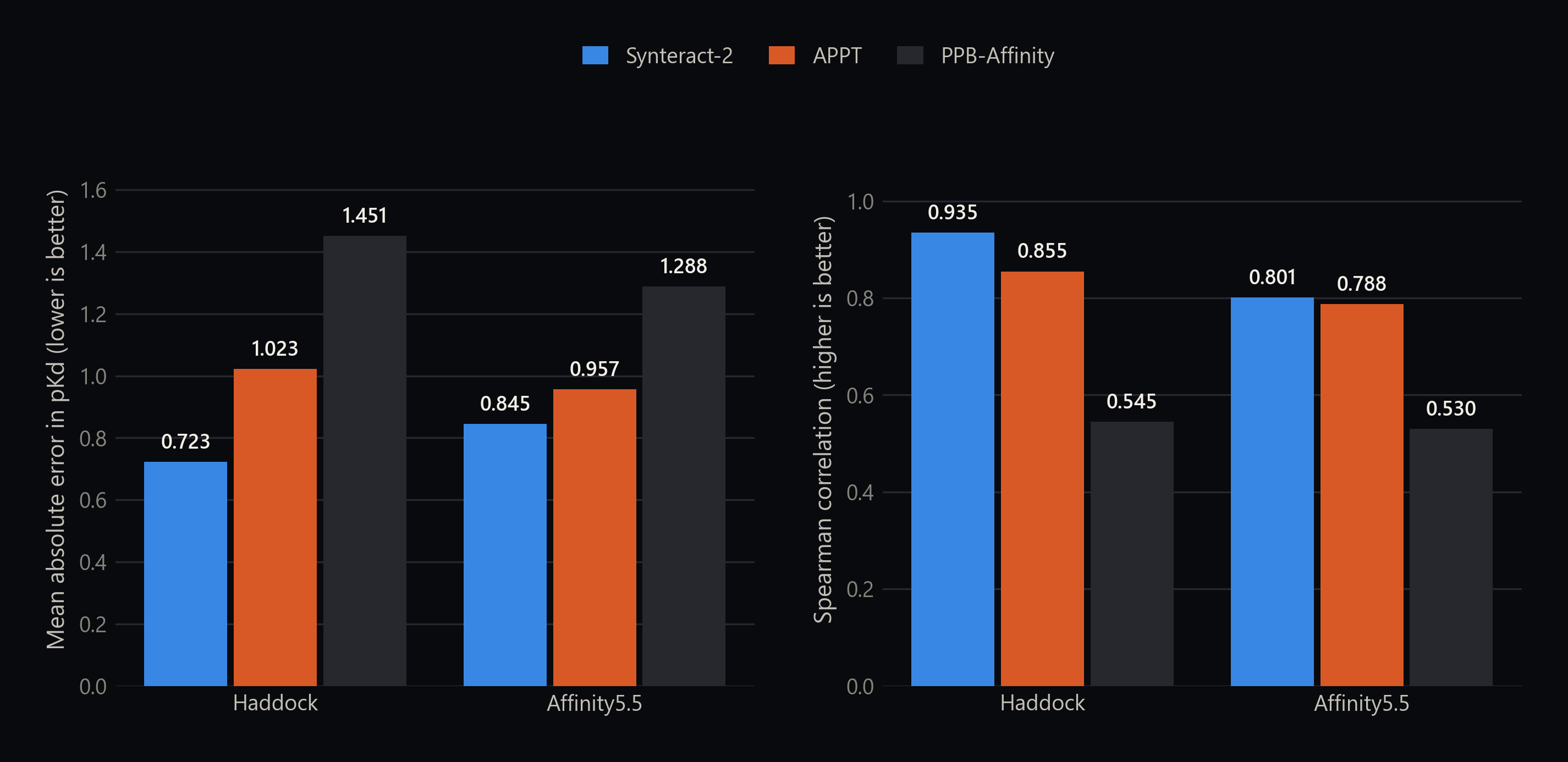
Synteract-2: From Yes-or-No to How Strong and Where
Knowing that two proteins interact is the least useful thing you can know about them. Synteract-2 predicts affinity and interface residues from sequence alone.
Read article →
Research · March 18, 2025 · Research · 5 min read
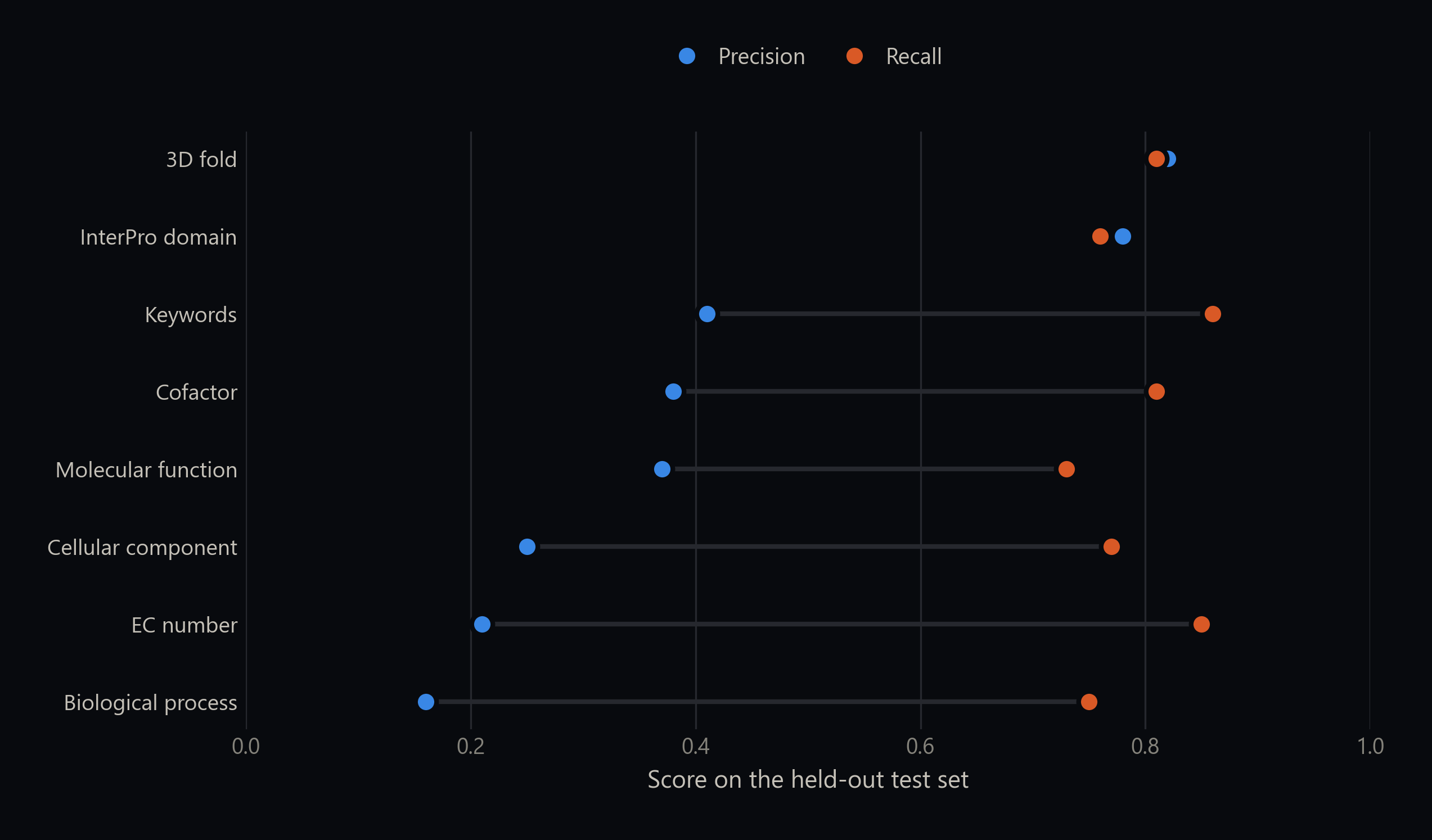
Translator: Broad Protein Annotation, Fast
A model that reads an amino acid sequence and returns structured functional annotations, tuned to catch nearly everything and let a human do the filtering.
Read article →
Research · July 30, 2024 · Research · 7 min read
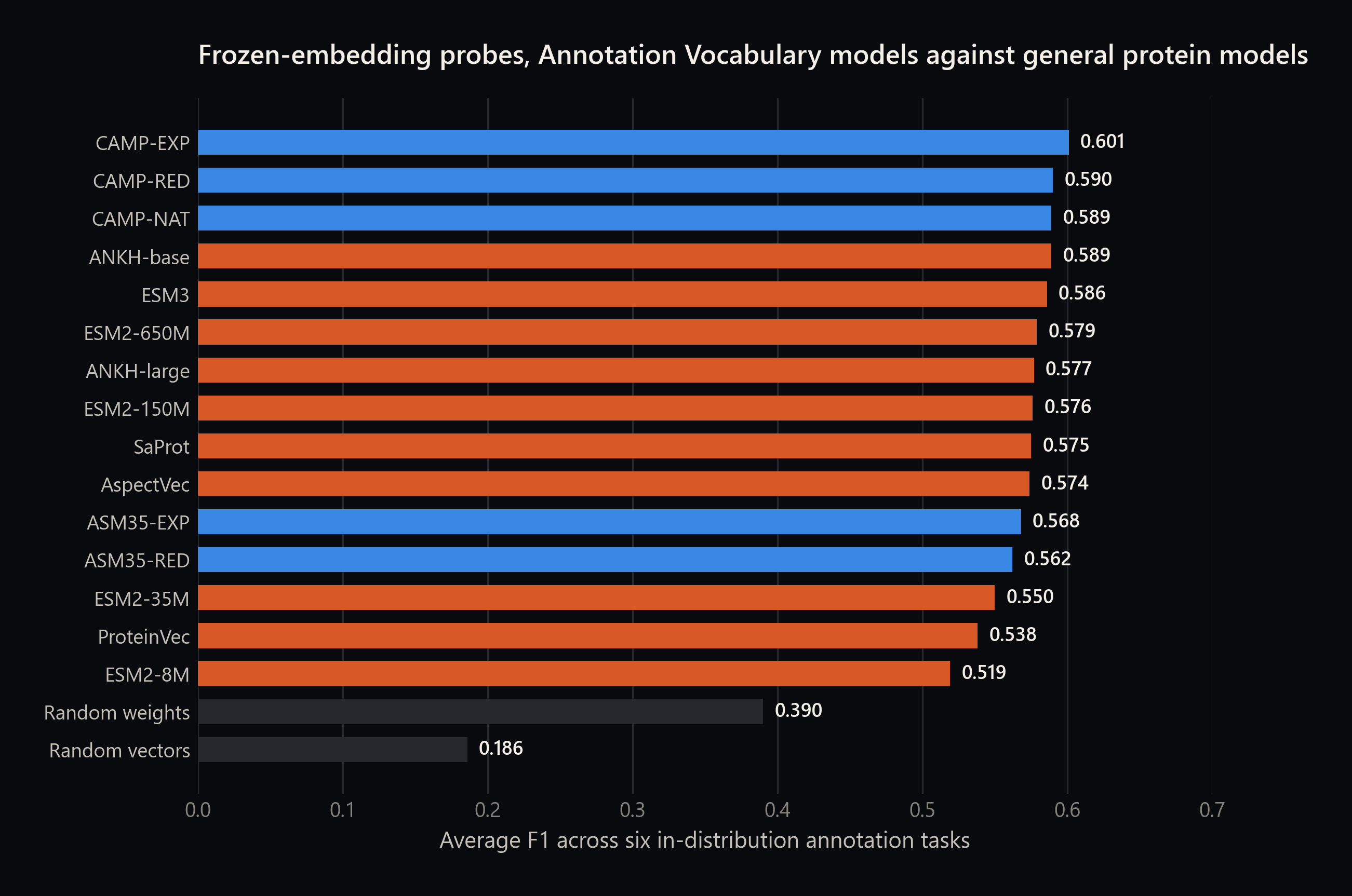
Annotation Vocabulary: Teaching Protein Models the Language of Function
Replace free-text protein descriptions with a vocabulary of ontology terms, and a model trained for three dollars in compute produces better functional embeddings than models a thousand times its cost.
Read article →
Research · September 15, 2023 · Research · 6 min read
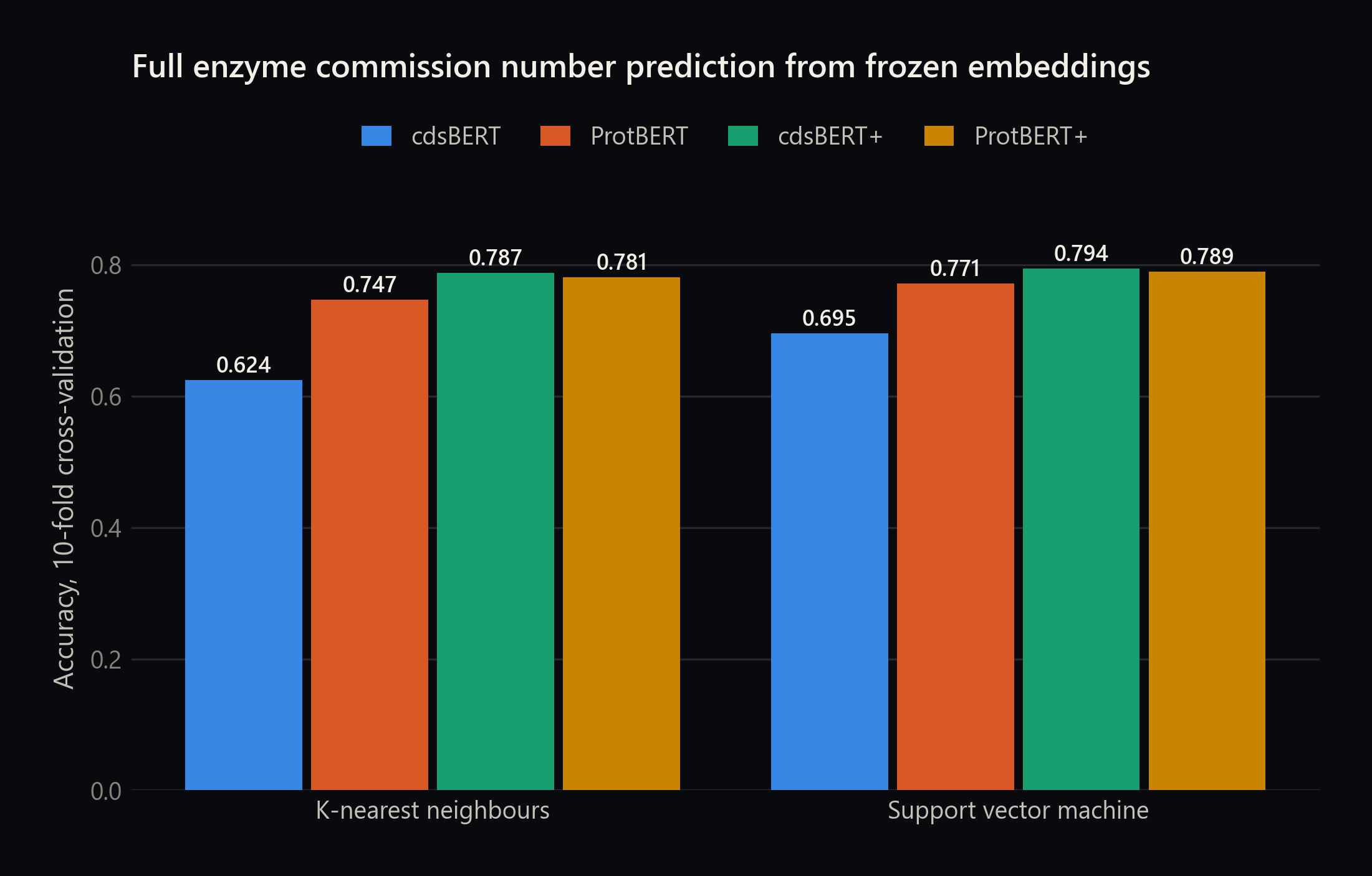
cdsBERT: Why Codons Still Matter for Protein AI
Two genes can encode an identical protein and still differ. cdsBERT extends a protein language model's vocabulary from 20 amino acids to 64 codons to find out how much that difference is worth.
Read article →
Research · June 7, 2023 · Research · 6 min read
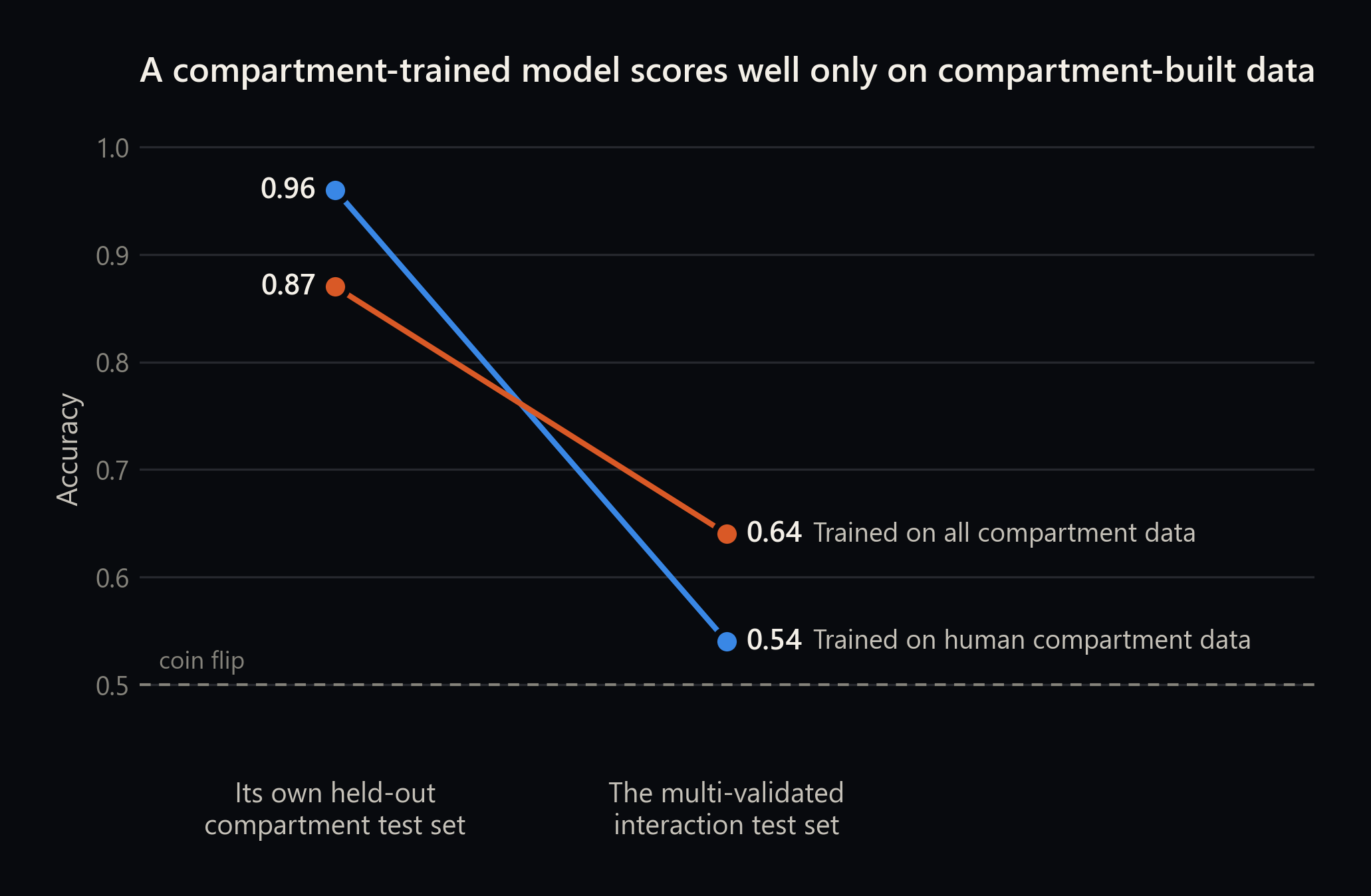
Synteract-1: Predicting Protein Interactions from Sequence
A protein language model reached 92 percent accuracy on held-out interaction data. The more useful finding was that the field's existing benchmarks could be solved with four features and a support vector machine.
Read article →